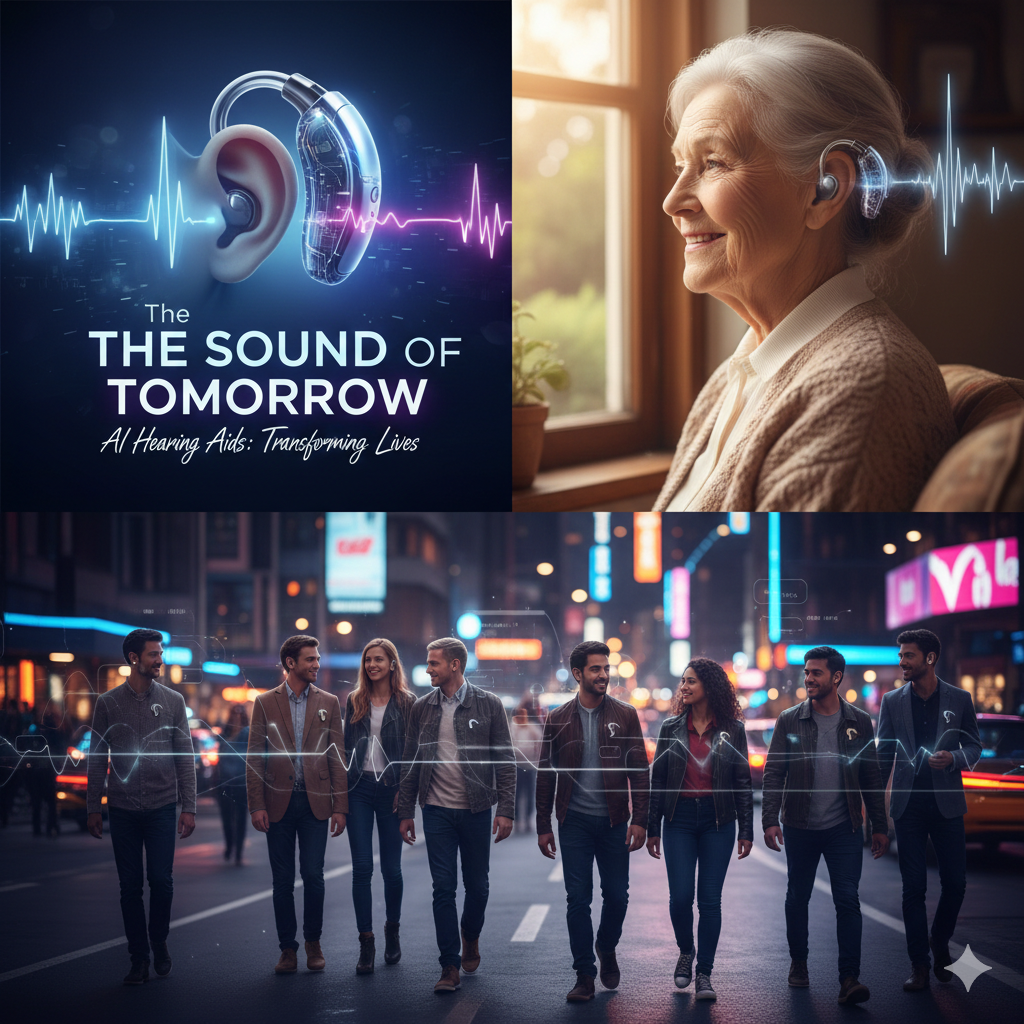
The Sound of Tomorrow: How AI Hearing Aids Are Quietly Transforming Lives
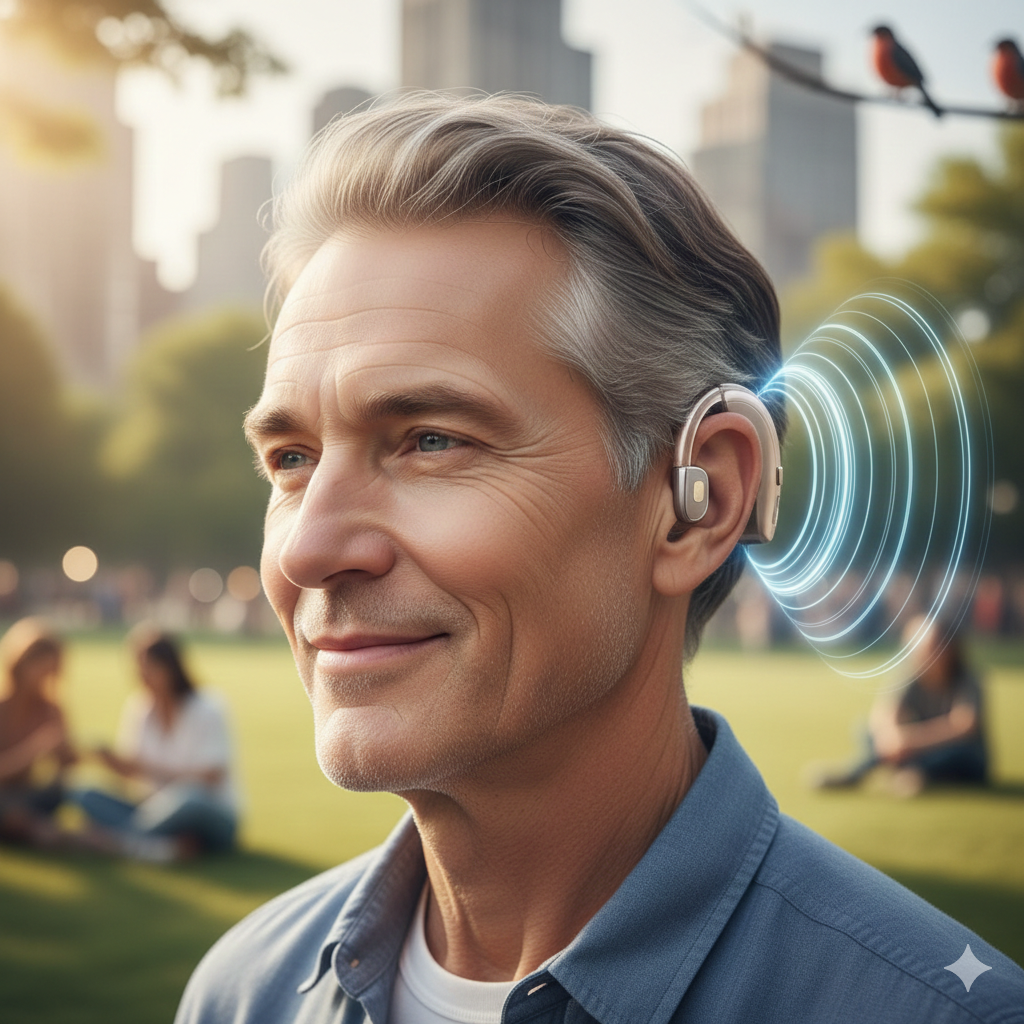
When we talk about the “AI revolution,” we usually focus on self-driving cars or chatbots that can pass bar exams. But some of the most profound changes are happening much closer to home—literally inside our ears. We are entering an era where hearing aids are no longer just simple amplifiers; they are becoming sophisticated AI-driven computers that are quietly transforming the lives of millions.
In my view, this is one of the most underrated applications of Artificial Intelligence today. While the media is busy debating the “dangers” of AI, these devices are out there solving a fundamental human problem: isolation. I’ve personally spoken with people who had given up on social gatherings because they couldn’t follow a conversation in a noisy room. Seeing them re-engage with the world thanks to a tiny piece of intelligent silicon is, quite frankly, moving.
The Evolution: From Amplifiers to Intelligent Processors
Traditional hearing aids were, to put it bluntly, quite “dumb.” They amplified all sounds equally—the person speaking to you, the clinking of forks in a restaurant, and the roar of a passing bus. This made them exhausting to use.
AI has changed the game through a process called “Deep Neural Mapping.”
- Scene Recognition: Modern hearing aids can analyze the acoustic environment thousands of times per second.
- Voice Isolation: They can distinguish between background noise and a human voice, suppressing the hum of an air conditioner while sharpening the words of a friend.
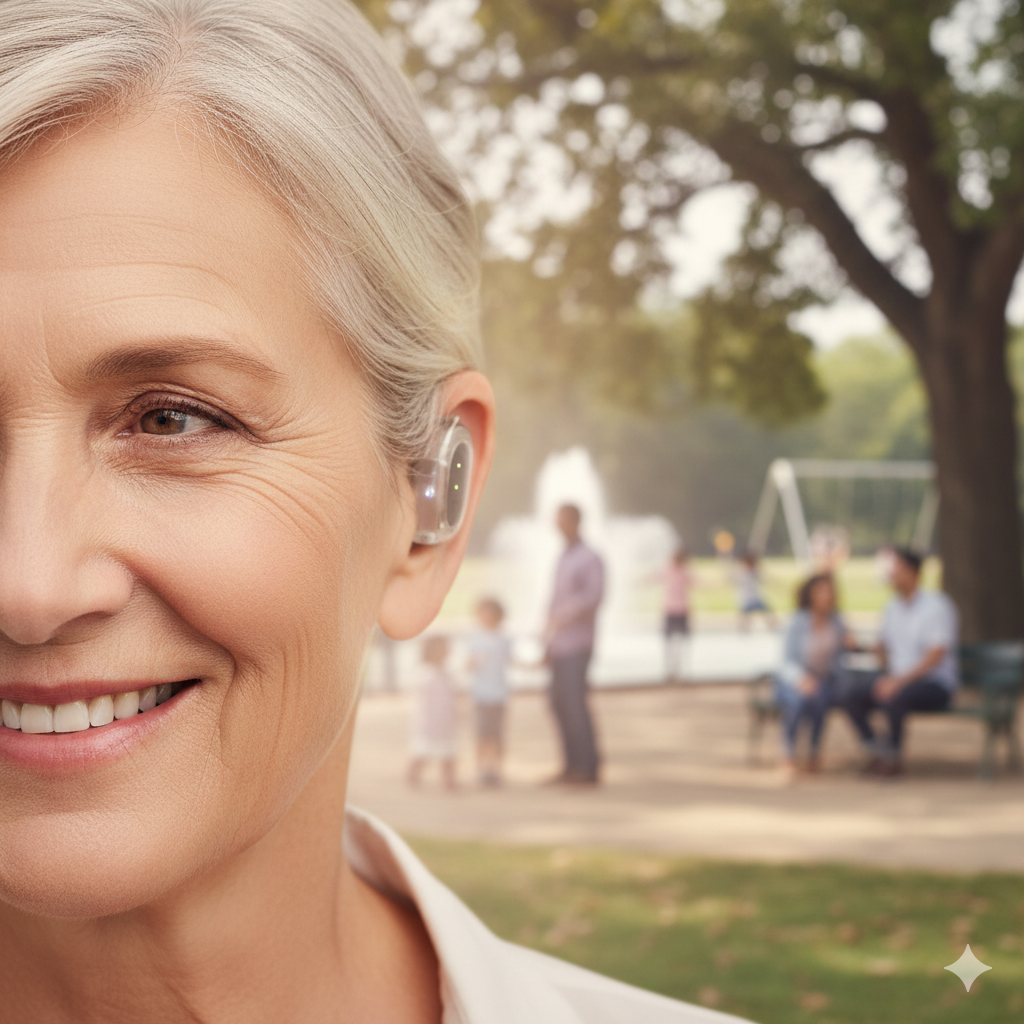
- Personalized Learning: These devices learn from the user’s preferences. If you always turn the volume up in a specific park, the AI remembers and adjusts automatically the next time you go there.
From my perspective, this transition from “passive hardware” to “active intelligence” is a masterclass in user-centric design. We aren’t just giving people their hearing back; we are giving them their confidence back.
Breaking the Stigma with Technology
For decades, there has been a social stigma attached to wearing hearing aids. They were seen as a sign of “getting old.” But the integration of AI is changing that perception. Modern hearing aids now look like high-end earbuds, and they do more than just help you hear—they stream music, translate languages in real-time, and even track your fitness.
I find it fascinating that by adding more technology, we have made the device “invisible” in a social sense. When a device becomes a “wearable computer” that everyone wants, the stigma disappears. I personally believe that in the next five years, we will see people without hearing loss wearing these “smart buds” just for the AI features, much like how people wear glasses as a fashion statement today.
Analyzing the Market: The “Picks and Shovels” of Health-Tech
From a financial and tech-business perspective, the hearing aid market is undergoing a massive disruption. Large tech companies are entering a space previously dominated by a few specialized firms.
My analysis of the competition shows that the “legacy” companies are scrambling to catch up with the software capabilities of Silicon Valley giants. I’ve noticed that the real winners in this sector aren’t necessarily the ones with the best speakers, but the ones with the most efficient AI chips. Low-power AI is the holy grail here—processing complex sounds without draining a tiny battery in two hours.
I find the “Over-The-Counter” (OTC) market particularly interesting. In many regions, you can now buy high-quality, AI-powered hearing aids without a prescription. This is a massive win for the consumer, as it drives down prices and forces innovation.
The Future: AI as a Cognitive Assistant
Looking ahead, I see hearing aids becoming “Cognitive Assistants.” Imagine an AI that doesn’t just help you hear, but also gives you a subtle nudge when it detects you’ve forgotten someone’s name, or monitors your heart rate and alerts you to stress.
In my view, we are just scratching the surface of what’s possible. By merging biology with AI, we are creating a new type of “human-computer interaction” that is seamless and helpful. I find it heartening that for once, the most advanced tech in the world is being used to make our daily lives quieter, clearer, and more connected.
Final Thoughts: A Quiet Revolution
The “Sound of Tomorrow” is already here, and it’s much clearer than we expected. AI hearing aids are a perfect example of how technology should work: quietly, efficiently, and for the benefit of human connection.
For the tech-finance community, this is a sector that proves that “impact” and “profit” can go hand in hand. In my opinion, as our population ages and our world gets noisier, the technology that helps us listen will become one of the most valuable assets we own. It’s not just about sound; it’s about the quality of life.