Mobile Privacy on the Line: What Every Phone User Must Guard Against in 2025
In 2025, mobile phones are much more than pocket-sized communication tools — they are digital vaults, wallets, identity hubs, and gateways to our finances, work accounts, social lives, and health data. With that much personal information stored inside, the stakes have never been higher. Mobile privacy isn’t just a luxury; it’s an essential part of everyday life that every user must understand and defend. DeepStrike
As someone deeply immersed in both technology and financial security, it’s clear that while the landscape has evolved rapidly, user awareness hasn’t kept pace. Many people still treat mobile privacy as an afterthought — and that’s exactly what attackers count on.
Why Mobile Privacy Matters in 2025
Smartphones today host incredibly sensitive data. Banking apps, digital IDs, biometric authentication, location logs, and encrypted chats all live on your device. Attackers know this, and cybercriminals are pivoting aggressively toward mobile targets. In fact, mobile attacks surged dramatically in recent years, with millions of incidents every month as threat actors target devices like they would a personal computer. DeepStrike
What makes mobile devices uniquely attractive is not just what they store, but how seamlessly they connect to networks, accounts, and services. Every app permission, network connection, or overlooked setting is a potential entry point.
Understanding why privacy matters is the first step toward defending it — and the second is knowing the threats ahead.

Top Mobile Privacy Threats in 2025
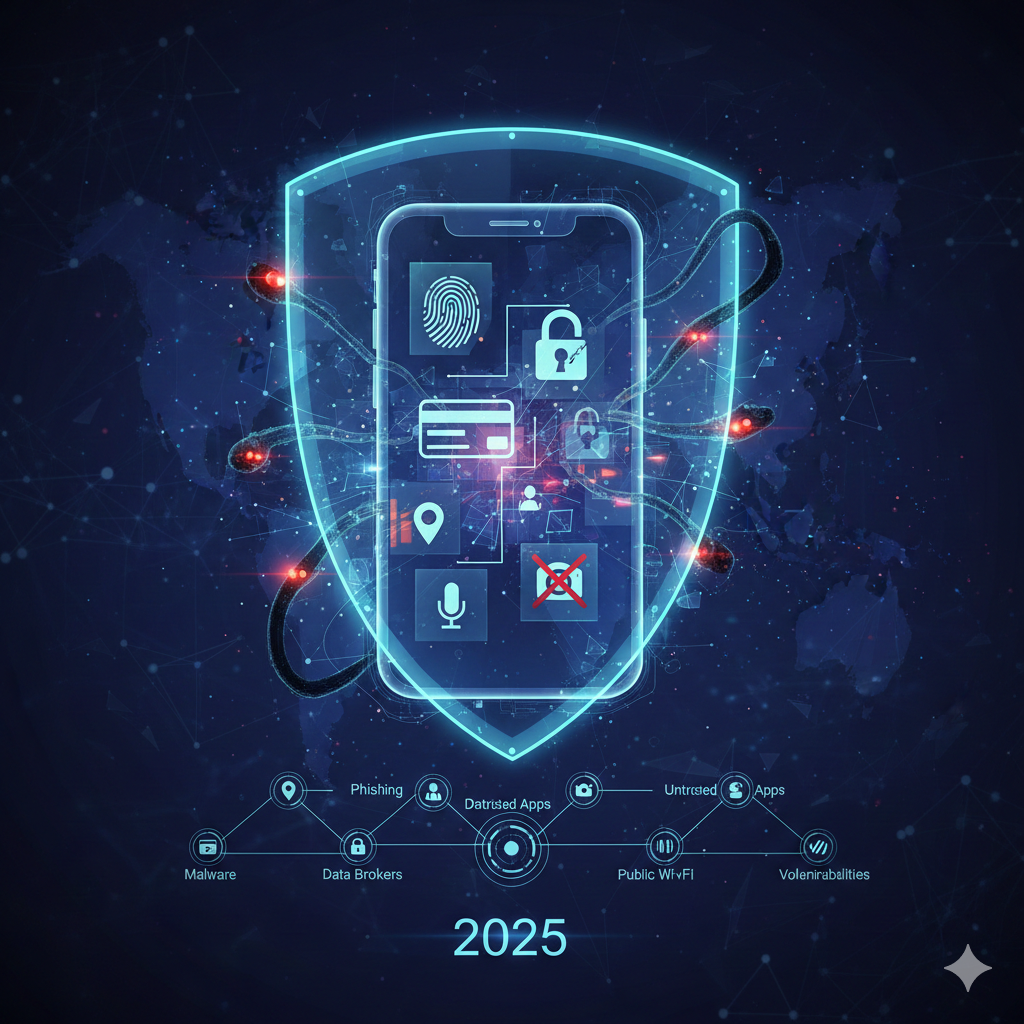
1. Sophisticated Malware & Spyware
Mobile malware isn’t limited to annoying popups or prank apps anymore. Modern mobile malware can:
- Steal banking passwords
- Harvest personal photos and messages
- Track your location quietly in the background
Even official app stores are not immune to malicious uploads, and Android’s flexibility — while powerful — can be a double‑edged sword when it comes to security. DeepStrike
2. Smishing and AI‑Enhanced Phishing
Text messages and social platforms are now prime channels for attacks that mimic real senders. Smishing — phishing via SMS — is rising fast, and attackers are increasingly using artificial intelligence to craft convincing lures and even deepfake voices, making it harder for users to spot scams. Reddit
3. Zero‑Click Exploits
These are sophisticated attacks that require no action from the user. Found mainly in advanced spyware like Pegasus, zero‑click exploits can infiltrate devices via messaging apps, firmware vulnerabilities, or even network interactions, silently compromising your privacy without any visible signs. DeepStrike
4. Fake Network Threats
Public Wi‑Fi hotspots or rogue cellular towers can intercept and manipulate your data. Even 5G connections aren’t automatically safe — attackers can use fake access points to steal credentials and monitor traffic. Indiatimes
5. Stalkerware and Excessive Permissions
Some apps request permissions unrelated to their function — like a simple game asking for access to your camera or SMS logs. These can turn into privacy nightmares, leaking your contacts and movements in the background. Reddit
Guarding Your Privacy: Practical, Real‑World Strategies
Protecting your mobile privacy isn’t about memorizing jargon — it’s about smart, consistent habits. Here’s what every user should do:
1. Keep Your Software Updated
This cannot be stressed enough. OS updates often patch critical security vulnerabilities, and delaying them is like leaving your front door wide open. UNDERCODE NEWS
2. Review App Permissions
Before installing any app — even from official stores — check what it will access. A flashlight app asking for contact access is a red flag. Disabling unnecessary permissions prevents apps from harvesting data they don’t need. UNDERCODE NEWS
3. Avoid Untrusted Wi‑Fi
Public Wi‑Fi might be free, but it could be a trap. If you must use public Wi‑Fi, always run your traffic through a reputable VPN to encrypt and protect your data. UNDERCODE NEWS
4. Use Strong Authentication
Don’t rely solely on SMS two‑factor authentication (2FA). App‑based or hardware 2FA keys are significantly safer and harder for attackers to intercept.
5. Think Before You Click
This might sound simple, but many breaches start with a single tap on a malicious link. Stay skeptical of unexpected messages, especially those that prompt urgent actions.
6. Lock and Encrypt Your Device
Enable biometric or strong PIN locks, and ensure your device encryption is turned on. If your phone is lost or stolen, this can stop attackers from accessing your personal data.
Platform Security: Android vs iOS — What’s the Reality?
It’s easy to fall into the trap of thinking one platform is completely safer than the other. The truth is nuanced:
- Android offers flexibility and customization — but that also means a larger attack surface and more opportunity for malware to slip in, especially through sideloading. DeepStrike
- iOS provides tighter controls and stronger centralized updates, but it’s not immune to advanced threats like zero‑click exploits or highly targeted spyware. DeepStrike
Neither platform is magically secure — your actions and settings make the biggest difference.
Beyond Individual Users: Mobile Privacy in the Bigger Picture
Mobile privacy isn’t just personal — it’s economic and societal. In 2025, smartphones are gateways to financial services, corporate networks, and personal identities. A single compromised device can expose bank credentials, social security data, and professional accounts.
The mobile privacy landscape is evolving rapidly, with new threats emerging every month. But that also means defenses are improving: privacy‑focused operating systems, enhanced network protections, and advanced anomaly detection tools are becoming more accessible.
Staying informed and proactive isn’t paranoia — it’s practical risk management.
Wrap‑Up: What Every User Must Take to Heart
Your phone holds the keys to your digital life. That’s why mobile privacy isn’t optional — it’s essential. By understanding the risks and adopting strong habits, you can turn your device from a vulnerability into a secure personal hub.
Don’t wait until something goes wrong. Protect your privacy today, and make the choices that keep your data where it belongs — with you.