
Internet Under Pressure: How Soaring Data Demands Are Testing Global Networks
The internet, once celebrated for its speed and accessibility, is now under unprecedented strain. From streaming ultra-high-definition videos to the explosive rise of artificial intelligence (AI) applications, the sheer volume of data being transmitted globally is pushing networks to their limits. For businesses, governments, and everyday users, these pressures aren’t just technical challenges—they affect productivity, security, and even energy consumption.
The Explosion of Global Data Traffic
Internet traffic has surged exponentially over the past decade, and recent projections show no signs of slowing down. By 2025, global traffic is expected to increase by nearly 20% year over year, driven by human activity, automated systems, and increasingly sophisticated online services.
AI systems, in particular, are changing the game. Bots, automated crawlers, and machine-to-machine communications now constitute a significant portion of all network requests. In fact, more than half of internet traffic is no longer directly human-driven, introducing complexity that older network architectures weren’t designed to handle.
Streaming services continue to dominate the landscape. Platforms like YouTube, Netflix, and TikTok now account for the majority of downstream bandwidth usage. With 4K and even 8K content becoming mainstream, networks are experiencing sustained pressure, particularly during peak usage hours.

Bandwidth and Infrastructure Under Strain
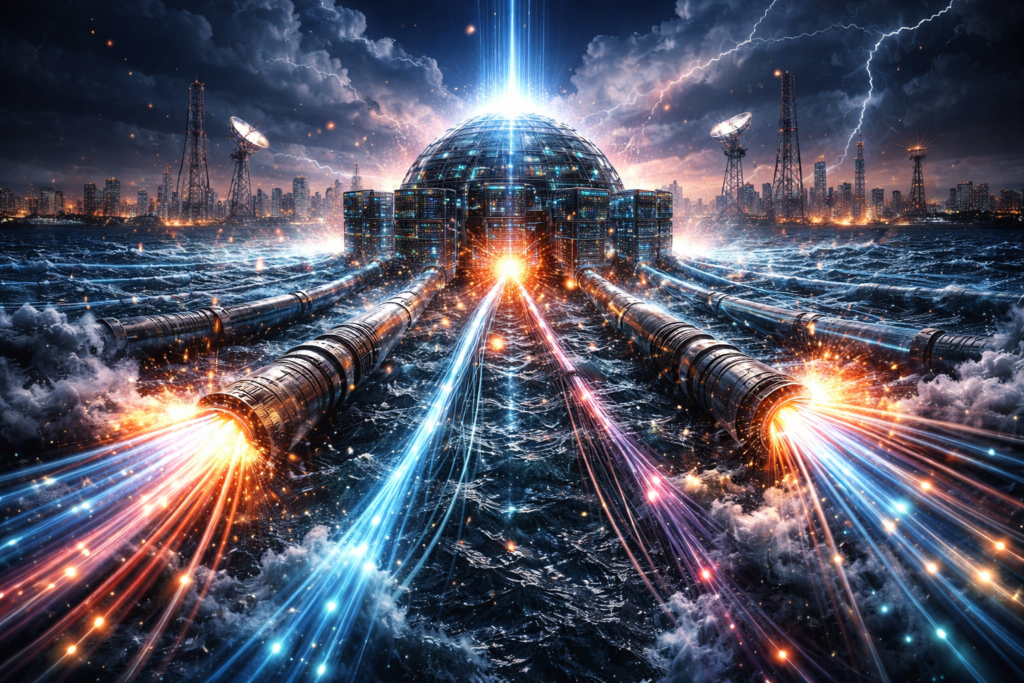
At the heart of global connectivity are submarine fiber optic cables and high-capacity exchange points like DE-CIX. While these systems are engineering marvels, they are not limitless. Upgrading global infrastructure is a costly and time-consuming process, often lagging behind the pace of demand growth.
Urban centers feel this strain acutely. Peak hours in metropolitan areas frequently result in congestion, slower download speeds, and even temporary service interruptions. While traffic engineering and advanced routing help alleviate these issues, network bottlenecks remain a recurring challenge.
AI and the Energy Factor
A critical dimension often overlooked in discussions about internet pressure is energy consumption, especially in data centers. AI is expected to drive a surge in electricity demand, potentially doubling the global energy consumption of data centers by 2030. According to the International Energy Agency (IEA), this could reach around 945 terawatt-hours, more than Japan’s total electricity consumption.
In the U.S., AI-powered data centers alone may account for nearly half of new electricity demand growth, surpassing energy use for all traditional industrial applications combined. While renewable energy is playing a growing role, reliance on gas and other conventional energy sources remains significant to meet immediate demands.
This energy footprint highlights an often underappreciated reality: the internet isn’t just about bandwidth and speed; it’s an enormous energy system in motion, with environmental and economic implications.
The Driving Forces Behind the Pressure
Streaming and On-Demand Services
High-definition video and interactive content are the biggest contributors to network congestion. As consumers increasingly expect instant, high-quality streaming experiences, content providers must optimize delivery while avoiding service interruptions. Content delivery networks (CDNs) help, but their efficiency is challenged by the growing scale of video consumption.
Artificial Intelligence and Cloud Workloads
AI workloads, from training models to real-time inference, generate massive data flows between data centers and cloud platforms. These processes are bandwidth-intensive and energy-intensive, creating a dual challenge: networks must handle data throughput while energy infrastructure keeps pace.
Cloud adoption further centralizes traffic, concentrating strain on fewer network paths. Enterprises running AI-powered applications often unknowingly contribute to network bottlenecks, highlighting the need for smarter routing and energy-efficient computing.
Mobile Devices and IoT Expansion
The proliferation of smartphones, tablets, and connected IoT devices adds another layer of demand. Smart cities, connected vehicles, and VR/AR applications increase traffic density and require low latency. In high-density regions, next-generation services like 5G and edge computing are essential to prevent localized congestion and maintain user experience.
Why Users Feel the Internet is Slower
Most internet users don’t think in terabits per second, but they experience network pressure directly: buffering videos, delayed uploads, or laggy video calls. These issues often stem from overloaded nodes, peak-hour congestion, or the high energy demands of processing AI workloads.
Even advanced networks can struggle to balance these competing pressures. Legacy infrastructure, long upgrade cycles, and surges in AI traffic create situations where demand temporarily outpaces supply, manifesting as slower experiences for the end user.
Security Challenges Complicate the Picture
Growing data flows increase exposure to cyber threats. Distributed denial-of-service (DDoS) attacks exploit the scale of modern networks, while AI-driven bots and malware add unpredictability. Networks must invest in robust security protocols and automated threat detection to prevent outages that amplify the pressure on infrastructure.
Economic and Environmental Implications
Expanding networks and data centers is expensive and energy-intensive. Data centers already account for a substantial portion of global electricity consumption, and projections indicate further growth driven by AI and digital services.
Economically, slow or interrupted connectivity translates into real costs: lost productivity, reduced customer satisfaction, and pressure on businesses to invest in private infrastructure. Environmentally, these trends highlight the urgency of energy-efficient computing, green data centers, and innovative cooling technologies.
Emerging Solutions
Several strategies are helping networks cope with rising demand:
- Edge Computing: Processes data closer to users, reducing long-distance traffic.
- Advanced CDNs: Caches content locally to relieve backbone congestion.
- AI Traffic Optimization: Predicts traffic spikes and intelligently routes data.
- Next-Generation Fiber Optics: Boosts backbone capacity to handle exponential growth.
- Renewable Energy Integration: Powers data centers sustainably, mitigating environmental impact.
These solutions illustrate the growing synergy between technology, energy efficiency, and intelligent network design, highlighting how challenges can drive innovation.
Looking Ahead: Adapting Networks for the Future
Global internet demand is unlikely to decrease. By 2027, total monthly traffic may exceed 300 exabytes, propelled by AI, cloud services, and immersive digital experiences. Meeting this demand requires collaboration across the ecosystem: telecom operators, cloud providers, policymakers, and users.
The next decade will not only test infrastructure scalability but also our ability to integrate energy considerations into network design. In a sense, the internet is undergoing a stress test — one that may determine how well it can support both human creativity and the AI-driven digital economy.
Conclusion
Connectivity is no longer a luxury—it’s the backbone of modern life. From financial transactions to online education and remote work, society depends on networks that can perform reliably at scale. While pressure on the internet is real and growing, it also presents an opportunity: the chance to build a smarter, greener, and more resilient digital ecosystem.
By embracing intelligent network design, energy-conscious infrastructure, and AI-driven optimization, we can ensure that global networks not only survive but thrive in the age of data explosion.