
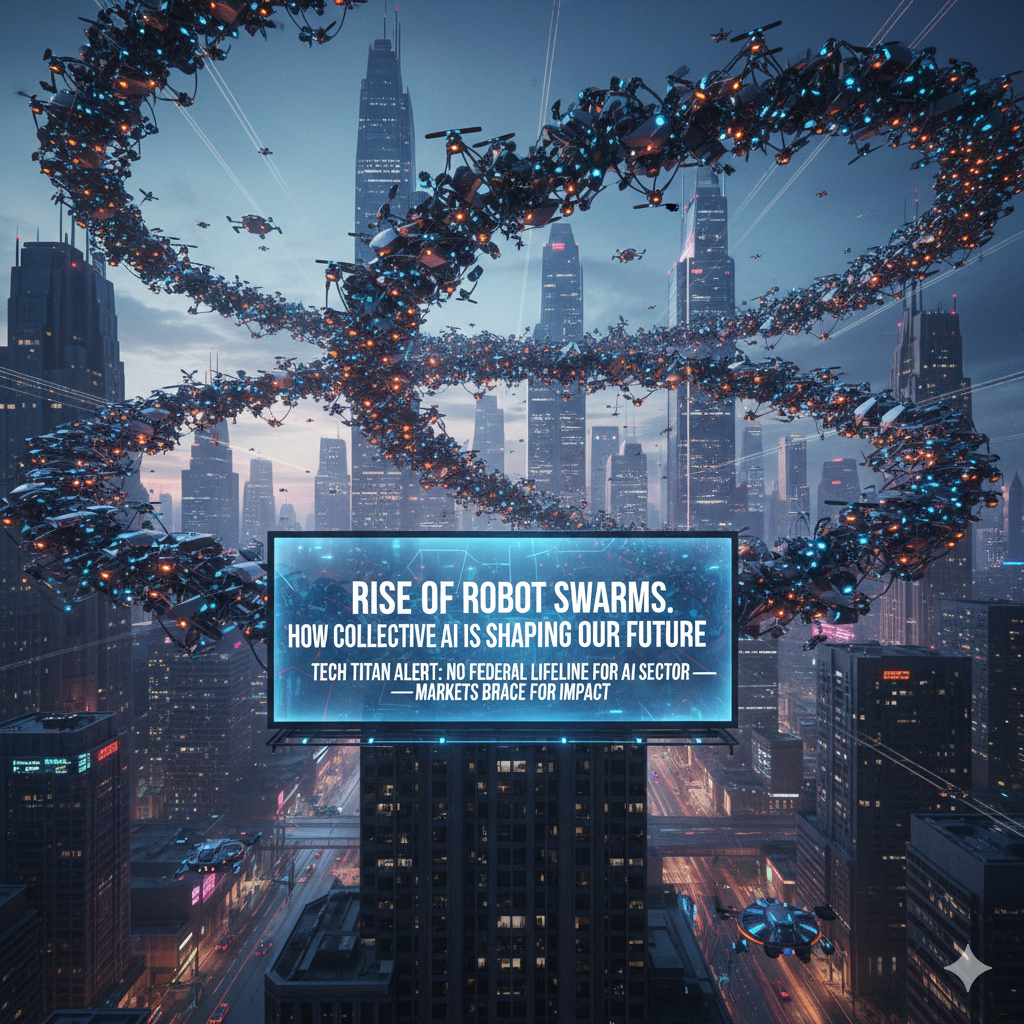
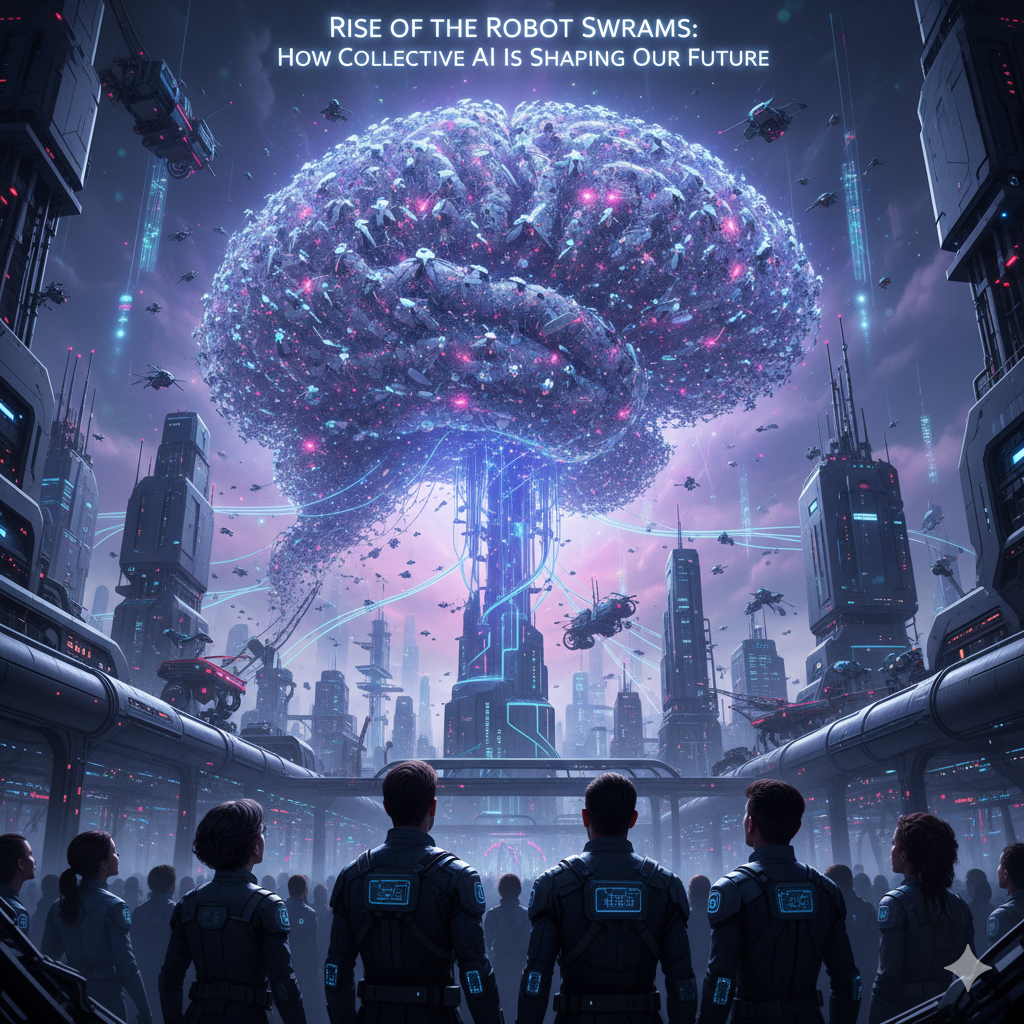
Rise of the Robot Swarms: How Collective AI Is Shaping Our Future
When we think of Artificial Intelligence, we usually picture a solitary brain—a giant server in a room or a chatbot on a screen. But the real revolution isn’t happening in isolation. It’s happening in groups. We are entering the era of “Swarm Intelligence,” where hundreds or thousands of small, relatively simple robots work together to achieve tasks that would be impossible for a single machine.
If you ask me, this is far more significant than a chatbot that can write poetry. This is about AI moving into the physical world in a way that mimics nature. Think of ants building a bridge or bees searching for a new hive. In my view, the “Rise of the Robot Swarms” is the moment AI stops being a tool we talk to and starts being a force that physically reshapes our environment.
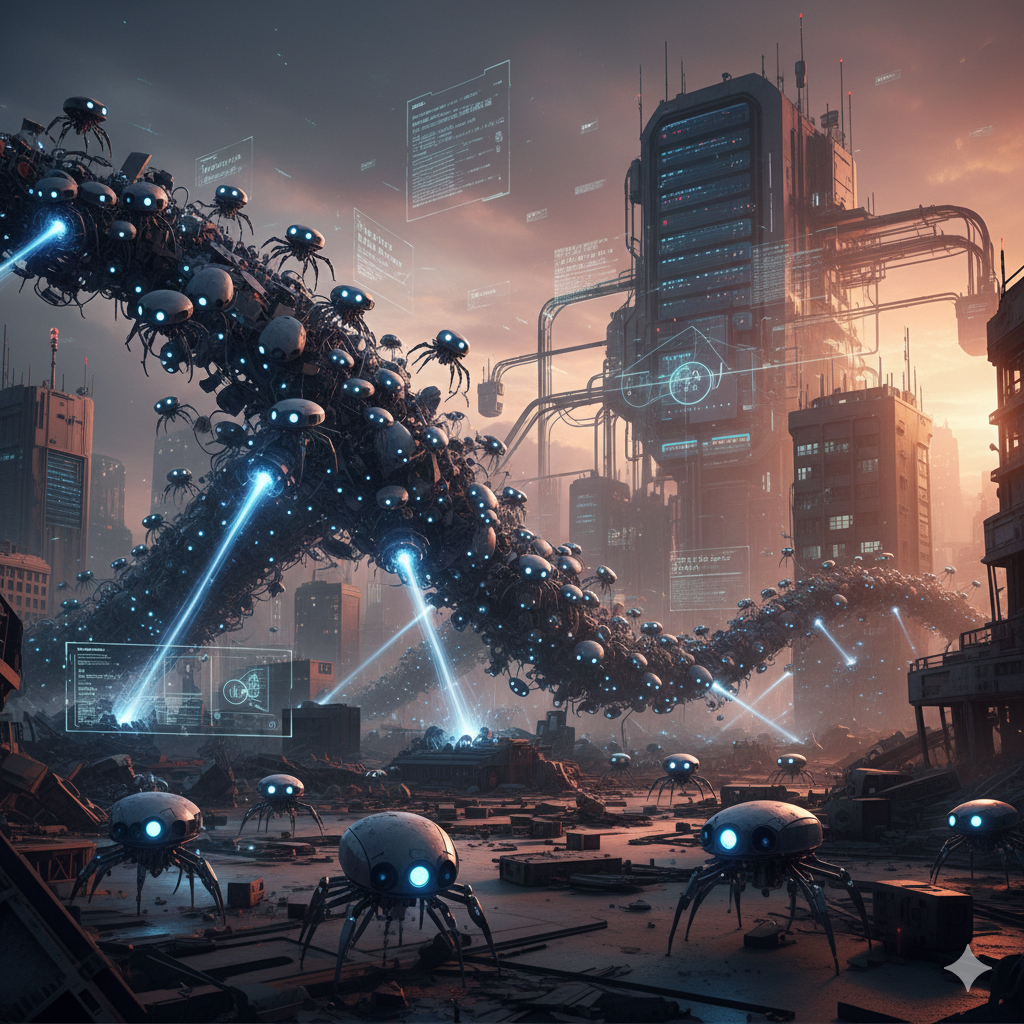
What is Collective AI?
At its core, Collective AI is about decentralization. Instead of one “master computer” giving orders, each robot in a swarm follows simple rules based on what its neighbors are doing. There is no single point of failure. If one robot breaks, the swarm just recalibrates and keeps moving.
I’ve analyzed how mainstream tech blogs explain this, and they often get bogged down in the math. They miss the bigger picture: resilience. I believe the shift from “Individual AI” to “Collective AI” is the most robust insurance policy we have for complex missions. Whether it’s exploring the surface of Mars or cleaning up a chemical spill, a swarm is simply smarter and tougher than a single unit.
Transforming Industries: From Agriculture to Medicine
The applications are already leaking into the real world, and the financial implications are massive.
1. The Future of Farming
Imagine a thousand tiny drones that don’t just spray a whole field with chemicals, but instead identify and treat every single weed individually. I personally think this is the only way we achieve truly sustainable agriculture. It’s more precise, uses fewer resources, and—crucially—it’s cheaper in the long run.
2. Search and Rescue
When a building collapses, sending in a large, heavy robot is often dangerous. But sending in a swarm of “robot insects” that can crawl through tiny crevices to locate survivors? That’s a game-changer. I find it incredible that we are finally using tech to solve problems that were previously limited by human physical constraints.
3. Warehouse Logistics
Companies like Amazon are already using “primitive” swarms, but the next generation will be fully autonomous. We aren’t just talking about moving boxes; we are talking about swarms that can reorganize an entire supply chain in real-time based on local demand.
The Ethical Crossroads: Why We Should Pay Attention
Now, here is where I differ from the typical “pro-tech” hype. Every major advancement has a shadow, and collective AI is no different. My concern is that once you have a decentralized swarm, it becomes very difficult to “turn off.”
If a single AI goes rogue, you pull the plug. But how do you stop a swarm of five thousand autonomous units that are programmed to achieve a goal at all costs? We need to have serious conversations about “kill switches” and ethical boundaries now, not in 2030. I don’t say this to be an alarmist, but because I believe responsible innovation is the only way this tech gains public trust.
Why the Competition Is Missing the Point
Most tech analysis focuses on the hardware—the sensors, the battery life, the carbon fiber. That’s a mistake. The real value is in the algorithms that govern the collective behavior.
When analyzing the current market, I see a lot of investment going into drone manufacturers. But if you want my honest opinion, the real winners will be the software architects. The companies that can write the “social rules” for robots will be the ones that dominate the next decade of automation. It’s the code, not the plastic, that matters.
Final Thoughts: A New Era of Collaboration
The “Robot Swarm” isn’t coming to replace us; it’s coming to do the things we can’t—or shouldn’t—do. We are moving toward a future where the physical world is as programmable as a computer screen.
For anyone interested in the intersection of finance and technology, this is a sector to watch with a critical eye. It represents a fundamental shift in how we solve problems. We are no longer building tools; we are building ecosystems. And in my view, the collective is always stronger than the individual.