New Rules for Mobile Banking Apps: What Every User Needs to Know
Mobile banking isn’t just a convenience anymore — it’s become the backbone of modern personal finance. With billions of users relying on smartphones to manage money, send payments, check balances, and invest, mobile banking apps have evolved rapidly. But as their usage expands, so do the rules governing how they’re built, how they protect you, and how you interact with them.
In 2026, new regulations and best practices are taking shape worldwide. These changes are designed to protect users like you from fraud and security breaches, while ensuring that banks innovate responsibly. Whether you’re a seasoned digital finance user or someone considering switching to mobile banking for the first time, understanding these new rules helps you manage your money with confidence.
Why New Rules Matter — More Than Ever
Even a few years ago, mobile banking mainly focused on convenience. Today, it must balance speed, security, privacy, legal compliance, and user trust. Banks and fintech providers operate in a highly regulated environment, which means the apps you use are shaped not only by technology but also by laws and industry standards.
Here’s why these rules matter:
- Your data has value — and risk: Financial information is one of the most targeted types of data for cybercriminals. Modern rules force app developers to safeguard your data with robust encryption and secure coding practices.
- Regulations level the playing field: Whether you use a big bank’s app or a fintech challenger, the baseline expectations for security and transparency are becoming consistent.
- You deserve clarity: New standards emphasize clear language about privacy, permissions, and how your data is used.
In short, mobile banking isn’t going backward — but it is getting safer and more accountable.
What’s New in Mobile Banking Regulations (2026 Update)
Several regulatory changes are now influencing mobile banking globally. While specifics vary by region, these trends are consistent in major markets like the EU, UK, US, and emerging economies:
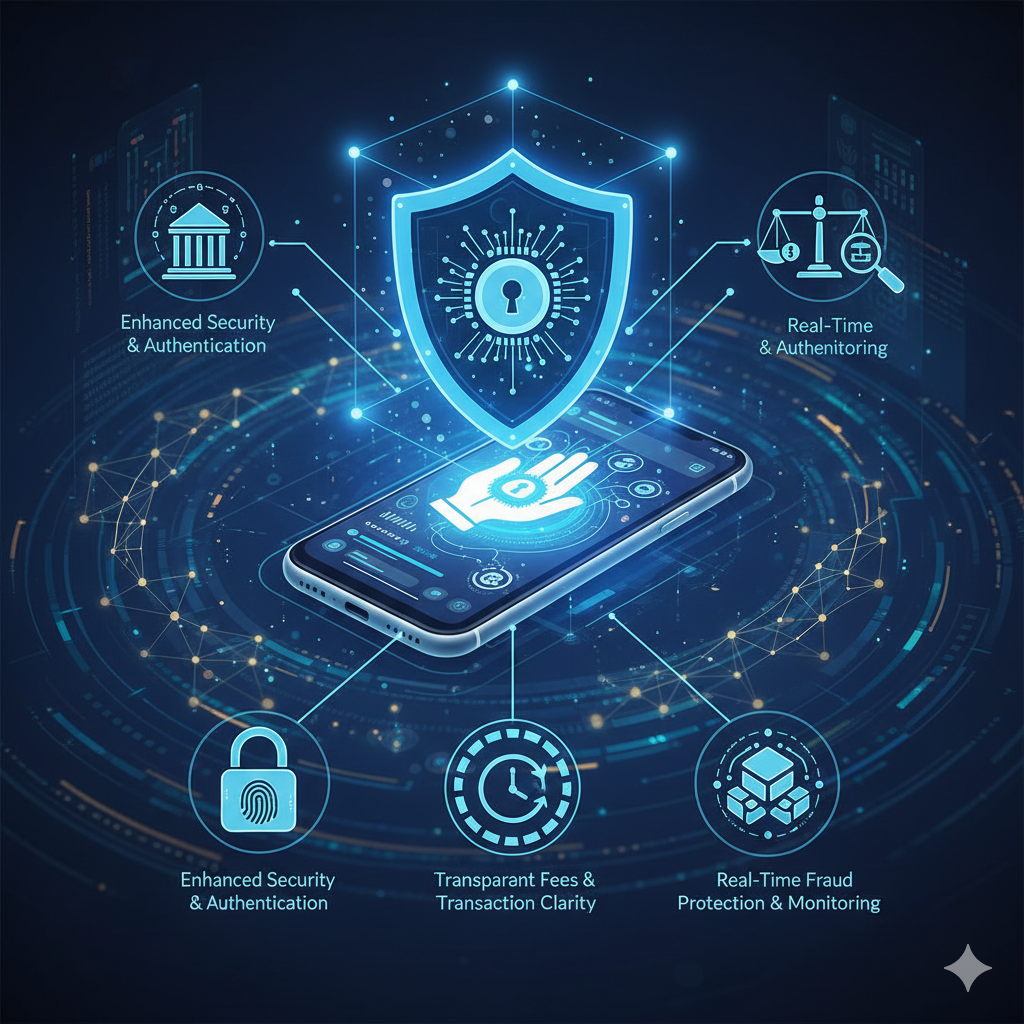
1. Strong Customer Authentication (SCA) Is Becoming Standard
Authentication is shifting from just passwords and PINs to more secure multi‑factor processes. Many banks now require:
- Biometric verification (fingerprint, face ID)
- One‑time passwords (OTP) sent to trusted devices
- Behavioral analytics (e.g., how you type or swipe)
This means the app you use must make fraud harder without making your experience frustrating.
2. Data Privacy Transparency
Privacy rules now require apps to:
- Clearly disclose what data they collect
- Explain how data is used or shared
- Offer options to opt out of non‑critical data collection
In practice, this benefits you because your financial and personal data remains under your control, not treated as a commodity.
3. Real‑Time Fraud Monitoring
Banks increasingly deploy artificial intelligence and machine learning to detect suspicious activity. It’s one thing to secure log‑ins — it’s another to monitor transactions, patterns, locations, and devices in real time.
4. Cross‑Platform Security Standards
Whether you log in via Android, iPhone, tablet, or wearable, apps must meet consistent security benchmarks. This reduces weak links in your banking security.
Security Features You Must Use (and Why They Matter)
Despite improved regulations, much of your safety depends on how you use your mobile banking app. These features aren’t optional — they’re now expected by modern standards:
1. Biometric Authentication
Face ID or fingerprints aren’t just convenient — they’re harder for attackers to replicate than traditional passwords.
2. App‑Specific Passcodes
Creating an in‑app passcode adds a second layer of protection. If someone gets access to your phone, they still need this code to open your banking app.
3. Push Notifications for Every Transaction
Instead of SMS alerts, most banks now send push notifications instantly. This allows you to spot unauthorized activity right away.
4. Session Timeout & Auto Locking
If you forget to close the app, automatic locking protects you. Modern rules push developers to set session timeouts even if users don’t choose them.
5. Encrypted Communication
Every message between your device and the bank’s servers is encrypted. This is not a luxury anymore — it’s a requirement in regulated markets to stop interception attacks.
How New Rules Impact Everyday Users
You might notice these changes directly when using your mobile banking app:
- More authentication steps — this feels like extra effort, but it dramatically reduces fraud risk.
- Better explanations of permissions and privacy settings — this gives you control rather than confusion.
- Smarter fraud alerts — fewer false alarms, and more relevant warnings tailored to your behavior.
- Smoother, safer user experience overall — good apps now balance convenience and safety instead of choosing one at the expense of the other.
These developments reflect an industry that finally listens to what users want: secure, easy, transparent banking on the go.

Practical Tips to Protect Yourself Today
Even though banks implement many protections, there are everyday habits that complement these changes:
Use Secure Networks Only
Avoid public Wi‑Fi when accessing your bank app. If you must, use a trusted VPN service — now a recommended security practice.
Keep Software Up to Date
App and OS updates often include security patches against the newest threats.
Understand Permissions
When an app asks for access to your location, contacts, or data, consider whether it’s necessary. Regulations now force permissions to be explained in user‑friendly language — use that.
Use Bank‑Approved Apps Only
Download your bank’s app directly from official stores (App Store / Google Play). Third‑party “helper” apps may not be regulated and can expose you to risk.
Enable All Security Features
If your bank offers biometric login, push notifications for transactions, or additional passcodes, activate them. These aren’t just features; under new standards, they form layers of defense.
Trends in Mobile Banking — What’s Next (2026 & Beyond)
The evolution of mobile banking isn’t slowing. Here’s what’s shaping the next phase:
1. Embedded Finance
Financial services are moving into unexpected places: social platforms, retail checkouts, even your smart car. New rules must catch up to ensure security wherever finance appears.
2. AI‑Driven Personal Finance Guidance
Some apps now offer budgeting suggestions, credit health insights, and automated savings tips. Regulations focus on transparency and accuracy of these recommendations to protect users.
3. Decentralized Finance (DeFi) Integration
Banks are beginning to connect with DeFi protocols under secure, regulated frameworks. This opens opportunities — and requires careful user education.
4. Digital ID Verification
Expect stronger digital identity solutions that make onboarding into financial apps faster and more secure without sacrificing compliance.
Frequently Asked Questions (SEO + User Value)
Q: Are mobile banking apps safe?
Yes, especially under the new rules. Modern encryption, multi‑factor authentication, and real‑time fraud detection make them safer than many traditional methods — but user behavior still matters.
Q: Why does mobile banking ask for biometric data?
Biometrics add a secure layer of identity verification that’s harder for attackers to bypass than passwords.
Q: Can mobile banking apps access my personal files?
No — reputable and regulated banking apps request minimal permissions and disclose how those are used. Always review permissions before accepting them.
Q: What should I do if I see an unauthorized transaction?
Report it to your bank immediately. Most providers have 24/7 support for fraud response.
Q: Do new rules affect international users differently?
Yes. Regulations vary by country, but global trends push toward stricter security and clearer user rights.
Conclusion — Staying Ahead in Mobile Finance
Mobile banking has reached a critical point: more powerful, more regulated, and more user‑centric than ever before. New rules aren’t obstacles — they are safeguards that protect your finances while enabling innovation.
Today’s mobile banking apps are smart, secure, and evolving rapidly. By understanding these rules and using the built‑in protections wisely, you take control of your financial life with confidence. In a world where technology changes fast, choosing informed habits means your money stays safer — and your experience smoother.